
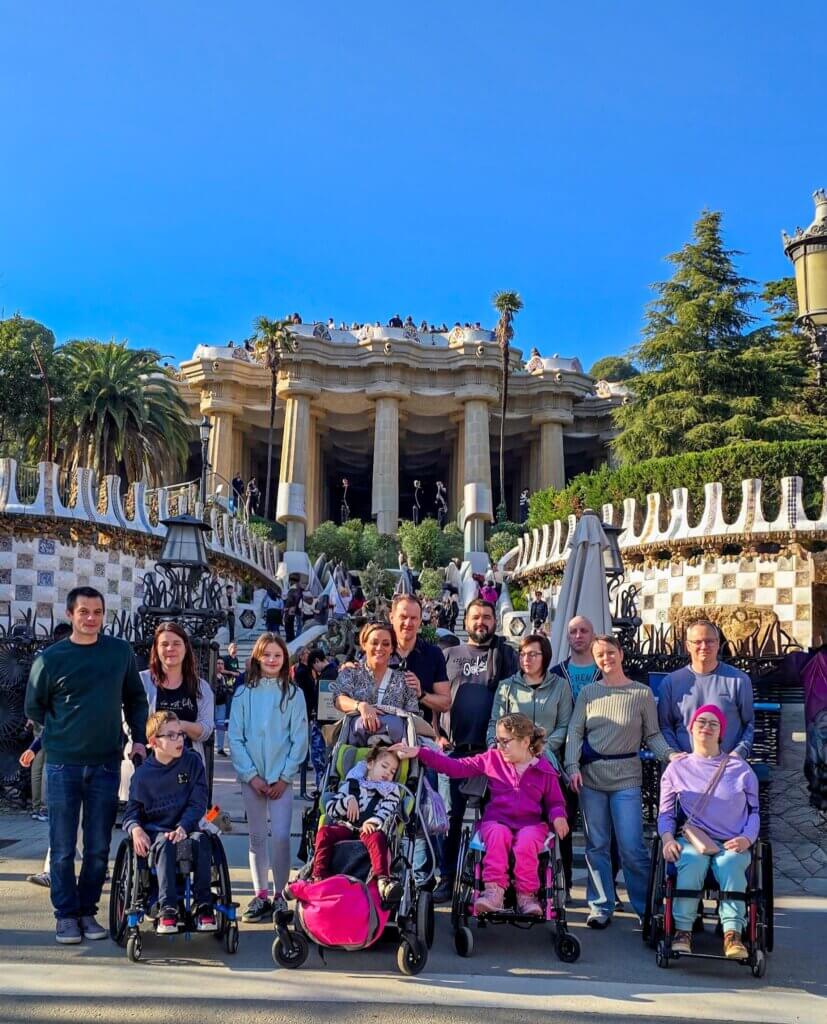
A few days ago, we set out with our families on one of the most important journeys – destination: Barcelona, Spain. As the founder and head of RehaZentrum Malovec, I have seen and experienced a lot in our work. But what happened at the clinic there surpassed everything.
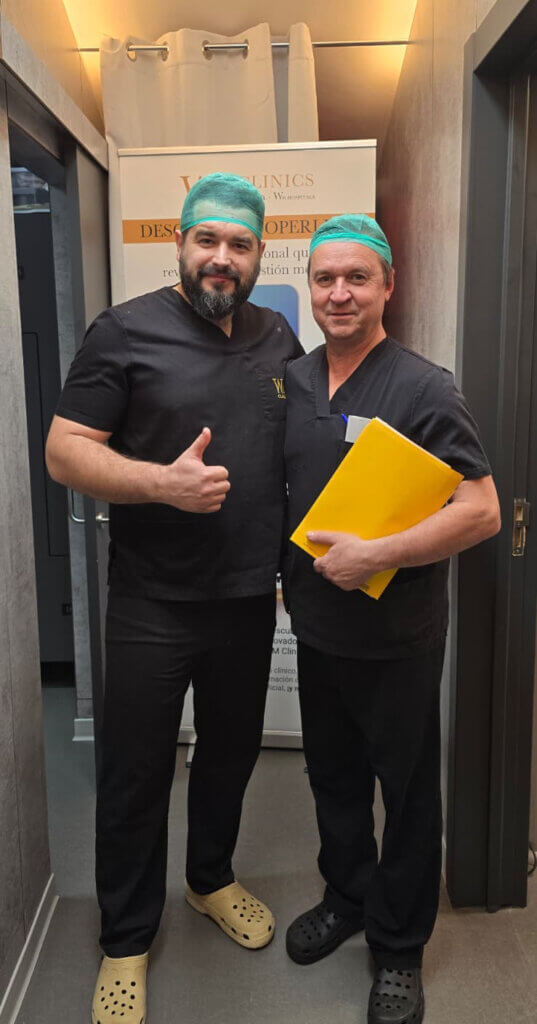
I had the honor and immense responsibility of being directly in the operating room (with proper permission), where the world-renowned Dr. Nazarov was operating. Being present during the surgery of our clients – our children – was a powerful experience. And the most powerful moment? It was when I literally felt with my own hands how that hard, relentless spasticity released under my fingers.
The feeling when a muscle that has “imprisoned” a child’s body for years and hindered physiological movement suddenly yields and softens under the surgeon’s hands… it cannot be described in a single paragraph. It is a moment where you see pure hope – and at the same time, immense space for further therapeutic work.
What is myotenofasciotomy and how exactly does it work?
If you are hearing this term for the first time, you are in good company. Myotenofasciotomy is a highly specialized, minimally invasive microsurgical procedure pioneered by Dr. Nazarov.
In cerebral palsy and other neurological lesions, pathological muscle tension occurs due to central nervous system damage. Muscles and their connective tissue sheaths (fasciae) shorten, stiffen, become fibrotic, and form structural contractures due to long-term spasms.
And this is exactly where a brilliantly simple yet highly precise solution comes in: Dr. Nazarov uses a special thin scalpel to percutaneously (through the skin) very specifically cut only those scarred, shortened fascial bands that create mechanical “pull”. The most important thing: The healthy muscle fibers, blood vessels, and nerve pathways themselves remain intact. We do not touch what is supposed to work – we release what has been holding them back for years.
Why is spasticity our biggest obstacle in rehabilitation?
I know one fundamental thing from practice: severe spasticity is often the main reason why rehabilitation gets stuck at a dead end. It is like hitting an invisible wall.
Spasticity fixes joints in a pathological position, reduces the range of motion (ROM), and prevents the child from activating antagonistic (opposing) muscle groups. Even when the child works hard and we therapists do our best, the biomechanical block won’t let us progress. In the long term, there are risks of:
- Deterioration of joint positioning
- Luxations
- Bone deformities
And this is exactly where myotenofasciotomy makes immense sense: when the mechanical pull of contractures is surgically removed and spasticity releases, the hardest obstacle falls. Our hands are literally “untied” – we can finally build new, more physiological motor patterns in real therapy.
How it works in practice: Step by step
Uncertainty is the worst thing for parents. Therefore, I will explain it simply and concretely – the system is clear. Dr. Nazarov’s surgery day is Tuesday, and the standard process looks like this:
- Monday (Arrival and accommodation): We usually arrive in Barcelona the day before the surgery. Families typically stay in a verified, wheelchair-accessible hotel about 10 minutes from the hospital.
- Tuesday (Surgery day): We arrive at the hospital at the exact agreed time; the children get a room, and a top-tier team prepares everything needed. The surgery takes approximately 1 hour and is performed under light anesthesia.
- Shortly after surgery: A surprise I love – since it is a minimally invasive procedure without large incisions or casting, the children are often very alert upon waking and immediately report being hungry. Only small puncture marks are visible on the body, sometimes a local bruise, but no extensive wounds.
- Wednesday (Journey home): Families typically leave the hospital the day after surgery following the morning ward round. They schedule their flights for either Wednesday afternoon or Thursday.
Four families, a common goal… and a language barrier?
This trip was a beautiful story of four families. The mutual support they gave each other was strong – we were there for each other like a big family. And the language? During these days, I had the honor of translating for our families from German to Russian, but the important thing is this: language is not a problem. If you do not speak Russian or Spanish, Dr. Nazarov’s team can provide a translator
What awaits us now: Unlocked doors to neuroplasticity
It is far from over with the surgery. By releasing the fasciae, we have “only” opened the door to something huge: neuroplasticity – the brain’s ability to learn new things.
Now it is time for our work: targeted and intensive neurorehabilitation, verticalization practice, building active muscle strength, and learning new movements that were simply not possible before.
And fairly speaking: RehaZentrum Malovec is not a requirement. Families choose which form of rehabilitation and which center is most suitable for them. We are here to advise, set up a plan, and help find the best path.
I am incredibly proud of our children for being so brave, and of the parents for their immense trust.
If you also feel that spasticity is holding you back in rehabilitation, or if you need a professional assessment of whether this procedure is suitable for your child, we would be happy to see you.
Consultation dates in 2026:
- June 26 – 27, 2026
- November 27 – 28, 2026
Do not hesitate to contact us and book an appointment. We are here for you – and together we will try to move forward.
Martin Malovec
Glossary of Terms for Parents
- Spasticity: Increased, unnatural muscle tension due to CNS damage. Muscles are stiff, “disobedient,” and hinder free movement. Imagine it as a constantly engaged handbrake.
- Fasciae: Connective tissue – the elastic “sheath” of muscles, bones, and organs. With long-term spasticity, they can shorten and scar, further restricting movement.
- Contracture: Permanent shortening of a muscle, tendon, or fascia. The joint then “locks” in an incorrect position.
- ROM (Range of Motion): The extent of movement in a joint. The goal is to increase it to give the child as much freedom as possible.
- Neuroplasticity: The brain’s ability to form new connections. When we release mechanical obstacles, we work specifically with it to help the child learn correct patterns.
- Minimally invasive procedure: A gentle surgery with tiny punctures. It means less strain, faster recovery, and no cast.Note: This article is informative and does not replace a personal consultation with a doctor. Dr. Nazarov assesses the suitability of the procedure personally and individually.