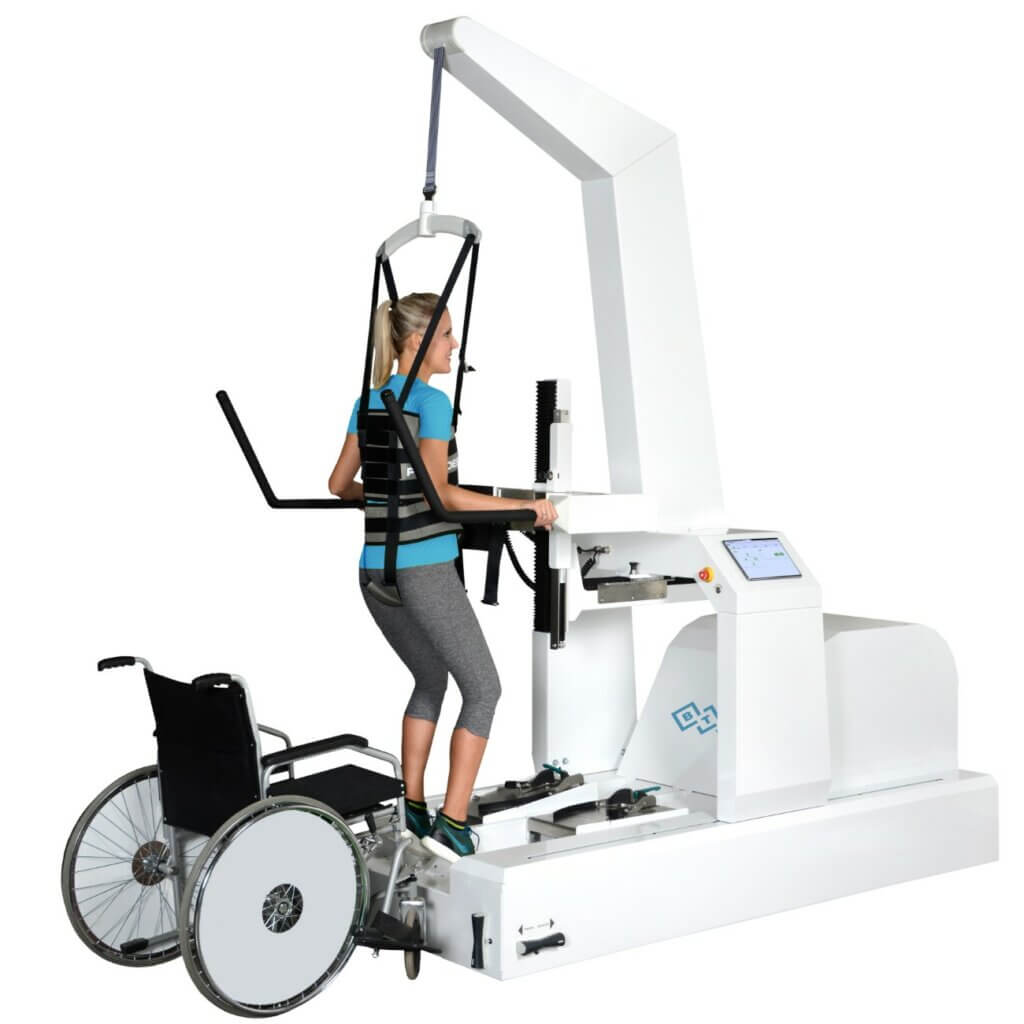

Impact of End-Effector Device on Gait Restoration in Children Suffering from Neurological Disorders
- Authors: Co-author Martin Malovec, RehaZentrum Malovec.
- Focus: This study was conducted directly at RehaZentrum Malovec on a sample of 25 pediatric patients. It evaluated the effectiveness of robot-assisted gait training (RAGT) using an “end-effector” type system.
- Results: The study demonstrated a statistically significant improvement in the number of steps, distance walked, and walking speed in patients.
- Source: The study is available online, for example, on the Fortune Journals portal.
- HTML version: Impact of End-Effector Device on Gait Restoration…
- PDF version: Impact of End-Effector Device on Gait Restoration… (PDF)

Enhancing Post-Stroke Gait Rehabilitation with Robot-Assisted Therapy: A Focus on Step Repetitions and Neuroplasticity
- Authors: Co-authored by Martin Malovec.
- Focus: This study analyzed data from 132 post-stroke patients (from five different facilities, including RehaZentrum Malovec) who used a robotic RAGT system. It focused on the importance of a high number of repetitions for neuroplasticity.
- Results: This study also confirmed a significant improvement in the number of steps, which supports the theory of the importance of intensive repetition in rehabilitation.
- Source: Published on websites such as BTLnet and Fortune Journals.
- HTML version: Enhancing Post-Stroke Gait Rehabilitation…
- Article about the study: Enhancing Post-Stroke Gait Rehabilitation… (BTLnet)